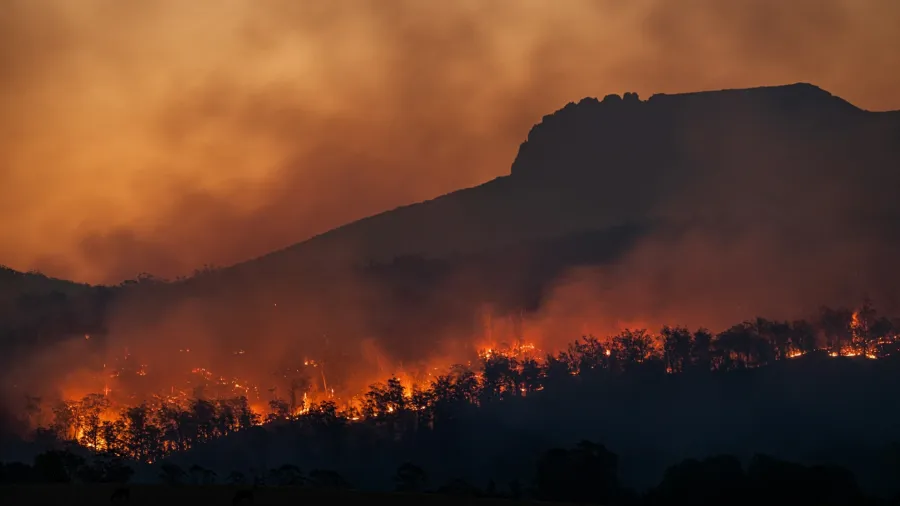
Droughts can exacerbate disasters that follow, such as bushfires, said DAS.
Australian insurers face up to a $29b risk from droughts, according to Digital Agriculture Services (DAS), an agriculture fintech and geospatial data company.
A single flash drought season could cost Australia up to $12b in lost economic output in 2026 to 2027, whilst a drought lasting several years could cost as much as $29b, DAS warned in a report on 1 October 2026.
A flash drought involves soil moisture collapsing within weeks to a couple of months, driven by intense heat and low humidity as much as by a lack of rain, DAS said. This is different from a conventional drought that builds over seasons or years.
Insurers face three blind spots with drought: visibility (where drought stress sits today), accumulation (where that stress is building across a portfolio) and trajectory (how it will change by 2030 and 2050), according to DAS.
“Drought may not be the claim, but it shapes the conditions around the claim. It’s both a risk in its own right and a multiplier of the perils that follow it,” said Sarah Gorman, co-founder of DAS.
Bushfires, for example, follow severe drought in Australia and can produce billions in insured losses. An example is the Black Summer fires, which cost insurers $1.87b—the largest bushfire loss even in Australian insurance history, said DAS.
DAS said that insurers need to measure drought with the same precision that they apply to floods, fire, storm, and cyclones.
“When insurers cannot tell a high-risk property from a resilient neighbour, the typical response is to reprice an entire postcode or withdraw from a region altogether,” DAS said in its report.
“Insurers who can tell one farm from the next can stay in markets their competitors may leave. For rural insurers, drought is no longer just a farm problem. It’s a portfolio risk,” Gorman said.